
Quick Summary
The Canyon arrives as a midsize Crew Cab with one bed length and one engine, the 310-horsepower TurboMax, pulling up to 7,700 pounds and carrying up to 1,570 pounds. The Sierra 1500 adds a larger frame, multiple cab and bed combinations, and a choice of V8 or Duramax diesel power that stretches towing toward 13,300 pounds and payload past 2,200 pounds. Canyon Elevation holds a ground clearance edge at 9.6 inches against 7.9 on the Sierra Pro, while the Sierra answers with more head and leg room, Super Cruise availability and a trim ladder reaching Denali Ultimate. Sierra pricing opens near $44,195, with the Canyon starting lower.
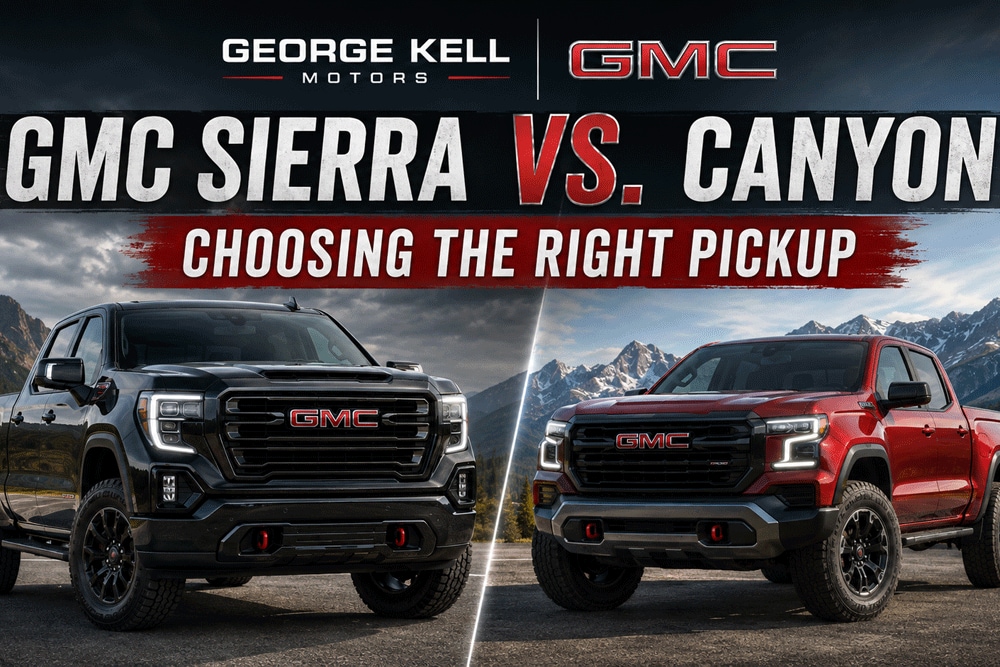
Truck shopping across Arkansas and the Delta rarely starts with a spec sheet. It starts with the job waiting on you. Maybe you are hauling hay to a back pasture, pulling a bass boat toward the river, or loading a jobsite trailer before sunrise. GMC builds two pickups that answer those calls differently, and the GMC Sierra vs. Canyon question lands on our lot almost daily. Both trucks carry real toughness, yet each one was engineered around a separate idea of your workday.
So which one belongs in your driveway?
Size and Footprint: How Each Truck Fits Your Driveway and Your Jobsite
Start with the tape measure, since footprint shapes every day of ownership. The GMC Canyon is a midsize pickup that arrives in one shape, a Crew Cab paired with a short bed, and that single configuration keeps it narrow enough for tight parking and easy backing into a crowded shop bay. The Sierra 1500 sits on a larger frame with a wider track and longer wheelbase options, and you can mix cab styles and bed lengths to match the work you do. Ground clearance flips the expectation, since Canyon Elevation rides on 9.6 inches while the Sierra Pro sits at 7.9 inches. If your days involve rutted field roads and gravel turnrows, that extra clearance carries weight. If they involve long trailers and full sheets of plywood, the bigger frame wins.
Engine Lineup: One Proven Powertrain Against a Full Menu
The Canyon keeps things simple with a single powertrain across every trim, the 2.7L TurboMax rated at 310 horsepower and 430 pound-feet of torque, paired with an eight-speed automatic. That torque arrives early in the rev range, which gives the truck confident pull from a stoplight or up a levee grade with a loaded trailer behind you. The Sierra 1500 starts with the same TurboMax on its Pro, SLE and Elevation trims, then opens a menu that the Canyon never offers. You can step up to a 5.3L V8, a 6.2L V8 producing 420 horsepower, or a 3.0L Duramax turbo-diesel that delivers 495 pound-feet of torque. One truck gives you a proven answer. The other lets you choose the answer that fits your exact load.
Towing Capacity: 7,700 Pounds or Something Far Heavier
Towing is the area where these two pickups separate the fastest. A properly equipped Canyon pulls up to 7,700 pounds, which covers a bay boat, a two-horse trailer, a skid steer on a light deck, or a mid-size camper for a long weekend. The Sierra 1500 starts higher and climbs from there, reaching roughly 9,500 pounds with the TurboMax and stretching toward 13,300 pounds when built with the Duramax and the right trailering package. Those maximum figures assume a specific build, usually a lighter cab and bed combination with the max trailering equipment installed, so your window sticker tells the real story. Longer wheelbase and heavier frame also steady a big trailer on the highway, which you feel on a windy open stretch of I-40.
Payload and Bed Options: What You Can Carry, Not Just Pull
Payload gets overlooked, though it decides whether a truck can carry gravel, feed sacks, tools and passengers at the same time. The Canyon handles up to 1,570 pounds in its short bed and cabin combined, which suits landscaping loads, camping gear and light jobsite equipment. The Sierra 1500 climbs to roughly 2,204 pounds with the TurboMax engine, giving contractors room for dense material like sand, block or bundled shingles. Bed choice widens the gap further, since the Canyon offers one short bed while the Sierra lets you order a bed sized to your cargo. Anyone hauling sixteen-foot lumber regularly will notice that difference on the first trip. Add tongue weight from a trailer to your payload math, since that pressure counts against the same number.
Cab Space, Seating and Everyday Comfort
Cabin space shapes how a truck feels after hour three. The Canyon seats five in a Crew Cab focused on practicality, with an 11.3-inch infotainment screen and wireless phone connection standard across the lineup. Rear passengers get honest room for school runs and short trips, though tall adults notice the tighter measurements on longer hauls. The Sierra 1500 offers greater head and leg room in both rows, and the difference shows most when three grown adults ride in back. Higher Sierra trims add features the Canyon does not carry, including Super Cruise hands-free driving on approved highways and as many as fourteen camera views for tight maneuvering. If your truck doubles as a family vehicle, seat time should guide you more than numbers alone.
Price and Trim Ladder: Where Your Money Goes
Budget tends to settle the argument, so look at where each truck begins. The 2026 Sierra 1500 opens around $44,195 for a Double Cab and roughly $46,595 for a Crew Cab, with pricing climbing steadily through the trim ladder. The Canyon starts below that, which puts a brand new truck within reach for shoppers who would otherwise shop used. Trim structure differs too, since the Canyon runs from Elevation through AT4 and AT4X, the latter adding an exclusive Baja drive mode for serious off-road work. The Sierra ladder stretches from the work-ready Pro all the way to Denali Ultimate, covering plain job trucks and near-luxury daily drivers alike. Figure your monthly payment against actual use, then let the numbers point you toward the right cab.
Pick the Truck That Fits Your Tuesday, Not Your Fantasy
The honest way to settle this choice is to picture your heaviest regular week rather than your heaviest imaginable day. Buyers overspend on capability they touch twice a year, and others buy short and regret it every haul season. Weigh what you actually pull, measure where you actually park, then let those two answers decide for you.
We have been matching Northeast Arkansas drivers with the right truck since 1963, and our sales team stays long enough to remember what you bought last time. Come drive a Canyon and a Sierra back to back, since twenty minutes behind each wheel settles more questions than any chart. Our GMC Business Elite department also handles fleet buyers, upfit guidance, and work-ready loaners for contractors and farm operations across the region.
Stop by our Newport showroom on South Van Dyke Road or call us today. We will have both trucks ready when you arrive.
FAQs
Can a GMC Canyon tow a two-horse trailer?
Yes. A properly equipped Canyon handles up to 7,700 pounds, which covers most loaded two-horse bumper-pull trailers. Weigh your trailer with horses, tack and water aboard before committing, since real-world weight often runs higher than owners expect. Anything larger points you toward a Sierra 1500. (52 words)
Do the Sierra and Canyon share the same engine?
They share one. The 2.7L TurboMax produces 310 horsepower and 430 pound-feet powers every Canyon and serves as the standard engine on Sierra Pro, SLE and Elevation trims. From there the Sierra opens up with a 5.3L V8, a 6.2L V8 and a 3.0L Duramax turbo-diesel. (50 words)
Which pickup fits better in a standard garage?
The Canyon, without much debate. Its midsize footprint comes in one Crew Cab and short bed configuration, keeping overall length manageable for tight garages and crowded parking. Sierra buyers who need garage clearance should look at shorter cab and bed pairings rather than a long-bed Crew Cab.
Categories:
Blog