
Quick Summary
The Yukon offers three engines, a 5.3L V8, an available 6.2L V8, and a 3.0L Duramax turbo-diesel delivering 495 pound-feet at 1,500 RPM, while the Expedition runs one 3.5L twin-turbo V6 rated at 400 horsepower, or 440 in High-Output form. Maximum towing favors the Expedition at 9,600 pounds against 8,400, though most trailers pulled by either SUV land between 4,000 and 7,000 pounds. Cargo space runs the other direction, with 25.5 cubic feet behind the Yukon's third row against 21.6, and 122.8 cubic feet maximum against 108.5. The Expedition starts near $64,995 and the Yukon near $72,395, which carries a 16.8-inch display and available Super Cruise.
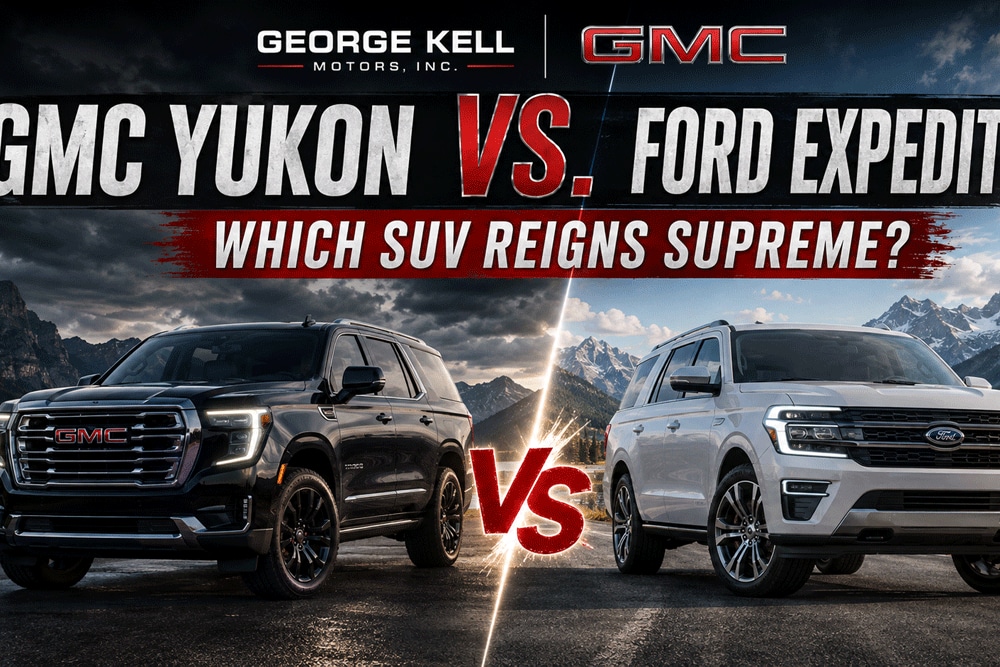
Full-size SUVs carry a strange kind of burden. They have to swallow a week of luggage, seat a whole ball team, pull a camper toward the lake, and still park at church on Sunday morning. Two of the most familiar answers in that class have been trading buyers for decades, and the GMC Yukon vs. Ford Expedition matchup still fills driveways from Newport to Memphis. Both hold three rows and both tow a serious trailer, though they arrive at that capability along very different roads.
So which road suits your household?
Three Engine Choices Against One
Engine selection is the first real fork in the road for this comparison. The Yukon hands you three distinct choices, starting with a 5.3L V8 rated at 355 horsepower and 383 pound-feet, moving to an available 6.2L V8 at 420 horsepower, and finishing with a 3.0L Duramax turbo-diesel that delivers 495 pound-feet of torque. The Expedition takes a single approach and refines it, running a 3.5L twin-turbo V6 rated at 400 horsepower and 480 pound-feet, with a High-Output version pushing those figures to 440 horsepower and 510 pound-feet. Both use ten-speed automatic transmissions, so the shifting behavior itself feels broadly similar from the driver's seat. The difference worth feeling is where the power arrives, since the Duramax delivers its full torque at just 1,500 RPM while turbocharged engines need a moment to build boost first.
Trailer Ratings and the Torque You Feel Every Day
Maximum trailer ratings favor the Expedition here, which reaches 9,600 pounds when properly equipped against 8,400 pounds for the Yukon. That headline figure deserves context, since it represents a ceiling most owners approach only a handful of times across an entire ownership period. A loaded bass boat, a two-horse trailer or a mid-size camper typically lands somewhere between 4,000 and 7,000 pounds, which sits comfortably inside both windows with room to spare. What you notice on a long pull up a grade toward the Ozarks is low-end torque, and 495 pound-feet arriving at 1,500 RPM changes how relaxed the whole drive feels. Four-wheel drive versions of either SUV usually give back a couple hundred pounds of capacity, so check the window label on the vehicle you actually plan to buy.
Room for People and Everything They Bring
Cargo space behind the third row is the one number that quietly shapes every family road trip. The Yukon holds 25.5 cubic feet back there, while the Expedition offers 21.6 cubic feet in the same position. Those nearly four additional cubic feet sound abstract until you are stacking a cooler, two duffel bags and a stroller behind a full house of passengers on a tournament weekend three hours from home. Fold the seats down and the spread widens even further, with the Yukon opening to 122.8 cubic feet at maximum against 108.5 cubic feet for the Expedition. Both SUVs seat seven or eight depending on whether you choose a second-row bench or captain's chairs, so the passenger count stays even and the luggage question ends up doing the deciding.
Screen Size, Hands-Free Driving and Where Your Money Lands
Sticker price opens in favor of the Expedition, which starts near $64,995 against roughly $72,395 for the Yukon. That gap is real, and it deserves an honest look at what the higher figure carries with it. The Yukon runs a 16.8-inch infotainment display, the largest screen offered anywhere in the full-size SUV segment, paired with an interior that leans on full-grain leather and open-pore wood in its upper trims. Super Cruise hands-free driving now reaches down to the Elevation trim rather than living only at the top of the ladder, which puts the technology within reach earlier than most shoppers expect. Fuel economy runs close, with the Expedition rated at 16 city and 22 highway against 16 and 20 for the Yukon, a difference of roughly two miles per gallon on the open road.
The SUV That Fits Your Everyday, Not Your Someday
A vehicle this size stays with a family for years, so the right choice tends to be the one that handles your ordinary Tuesday rather than your rare heavy haul day. Count the seats you fill and the gear you stack behind the third row, then trust what those numbers tell you. We keep Yukons on our Newport lot in several trims, and our sales team will walk you through engine options, trailering packages, and the Yukon XL if your household needs more room. We also handle trade appraisals and offer extended service plan coverage for families planning to keep an SUV a long while.
Stop by 3808 South Van Dyke Road in Newport, or call us ahead, and we will have a Yukon ready for you to drive today.
FAQs
Which full-size SUV holds more cargo behind the third row?
The Yukon, by nearly four cubic feet. It offers 25.5 cubic feet with all three rows occupied against 21.6 for the Expedition, and 122.8 cubic feet maximum against 108.5 with seats folded. That gap shows up fastest on trips where every seat is filled and luggage still needs a home.
Does the Yukon offer a diesel engine?
Yes. The 3.0L Duramax turbo-diesel produces 305 horsepower and 495 pound-feet of torque, and it delivers that full torque figure at just 1,500 RPM. Low-end pull like that changes how a loaded trailer feels on long grades. Diesel also stretches highway range between fuel stops on longer trips.
How much can each SUV tow?
A properly equipped Expedition reaches 9,600 pounds, while a properly equipped Yukon reaches 8,400 pounds. Both figures represent maximums that require specific configurations. Four-wheel drive versions typically give back around 200 pounds of capacity, so confirm the rating on the exact vehicle before hitching anything substantial to it.
Categories:
Blog